

April 9, 2025
I wanted to love Meditations by Marcus Aurelius. Stoic wisdom? Ancient life lessons? Yes, please.
But the audiobook? It felt like being gently lulled into a coma.
The narrator’s voice never changed. Same tone. Same pace. Same volume.
And that right there is one of the most common mistakes presenters make.
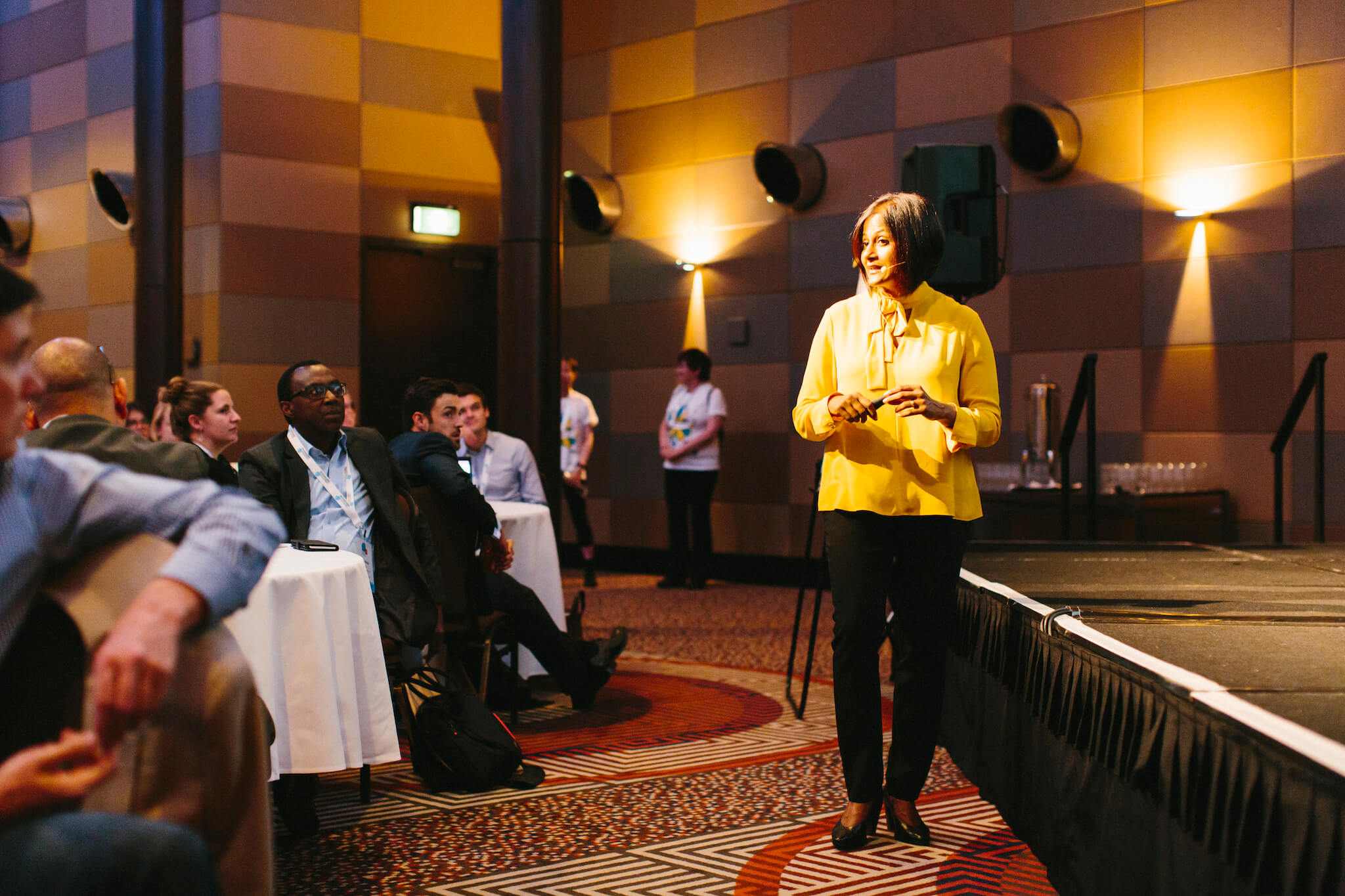
If your voice doesn’t change, your audience will. Into people who are mentally writing grocery lists. Or checking their phones. Not because they’re rude but because the human brain craves contrast. If everything sounds equally important, nothing is.
Your voice is your most potent presenting tool. And like any good instrument, it needs range.
The best speakers—whether it’s Brené Brown or Barack Obama—don’t just deliver information. They use pace, tone and volume to guide how we feel, what we remember, and when we lean in. And you can, too. Here’s how:
1. Pacing: Speed and Stillness
Slow down before a key point to build anticipation. Speed up during a story to create energy.
💡 Try this and read aloud: “Stoic wisdom? Ancient life lessons? Yes, please!” quickly, like you’re excited. Then slooow down for “It felt like being slowly hypnotised into a coma.” Feel the shift?
2. Volume: The Whisper Trick
Sometimes, the most powerful thing you can do is whisper. It pulls people in.
💡 Whisper “Same tone. Same pace. Same volume.” See how it instantly grabs attention?
3. Tone: Mirror Emotion
Your voice should match your message. Speak the way you feel.
💡 Say “I wanted to love Meditations” with genuine enthusiasm. Then, “But the audiobook?” like it truly let you down.
4. Authority: Cut the Uptalk?
Ending every sentence like it’s a question? That’s uptalk—and it makes you sound unsure.
💡 Say, “This is important.” with certainty. Now try, “This is important?” Hear the difference? The second version sounds like you’re asking for permission.
5. Repetition: Say It Twice, Differently
Repetition = reinforcement. Your audience won’t catch everything the first time, so if something matters, repeat it. But vary your emphasis.
💡 Read this out, emphasising the bolded words.
“Your voice is your most powerful instrument.” (Pause.)
“Your voice is your most powerful instrument.”
Elevating your voice doesn’t have to be overwhelming. Start small. Pick one technique and try it. The more you experiment, the more natural it feels.
Soon, you won’t just be talking—you’ll be captivating.
I’m taking a short break for Easter. Wishing you a joyful, peaceful holiday—and I’ll be back in your inbox on May 2nd. (I know. May. Already!)

Discover my One Powerful Tip to Unleash Your Storytelling
Discover the single most transformative technique that will take your narratives from ordinary to extraordinary. Whether you’re a writer, filmmaker, or simply someone who loves to share stories, this tip will revolutionize the way you craft and present your tales.
Recent Posts

Apr. 07, 2026
This is what becomes more valuable as AI makes everything sound samey

Mar. 30, 2026
I would love you to try this
Mar. 23, 2026
The truth about presentations no one tells you

Mar. 11, 2026
How to get the most out of your next conference

Mar. 05, 2026
If you want people to fall in love with you

Mar. 03, 2026